How to Build a Modern Histopathology Lab: Essential Equipment and Workflow Guide
Table of Content
[Hide]
Building or upgrading a histopathology laboratory requires much more than preparing a list of instruments. Hospitals, diagnostic laboratories, research institutions, and laboratory project contractors need to consider how specimens will move through the laboratory, where identification occurs, how information is transferred between workstations, which processes should be automated, and whether the equipment can support future increases in specimen volume.
A modern histopathology laboratory typically connects several stages: specimen reception, gross examination, cassette identification, tissue processing, embedding and sectioning, slide identification, staining and coverslipping, diagnosis, and long-term specimen storage. Each stage has different equipment requirements, but purchasing them independently without considering the complete workflow can create unnecessary manual steps and bottlenecks.
For procurement teams, the objective should therefore be to build a laboratory in which equipment, operators, specimens, and information move through a logical process. This guide explains the essential histopathology lab equipment required at different stages and the questions B2B buyers should consider when planning a new laboratory or upgrading an existing one.
Start With Specimen Volume and Laboratory Workflow
Before selecting individual instruments, determine what the laboratory actually needs to process. Equipment suitable for a regional hospital handling a moderate daily workload may not be appropriate for a centralized pathology laboratory processing specimens for several hospitals.
Begin by estimating the average number of specimens received each day and, more importantly, the peak workload. A laboratory processing 300 specimens evenly throughout the day may have different equipment requirements from one receiving most of those specimens during a short morning period.
Procurement teams should also map how specimens currently move between workstations. Identify where technicians manually enter information, sort cassettes, transport blocks, match slides, or retrieve archived specimens. These points frequently reveal where equipment or automation can provide greater value.
Laboratory layout should be considered at the same time. Grossing equipment requires appropriate ventilation and working space, printers should be positioned according to where identification occurs, and downstream equipment needs sufficient space for operators and specimen movement.
For a new project, reviewing an integrated pathology laboratory solution can help procurement teams understand how different equipment categories fit into hospital, laboratory, research, and university applications. Jinquan's current solution portfolio connects grossing, tissue processing, cassette and slide identification, staining/coverslipping, and specimen management rather than presenting laboratory automation as a single-machine project.
Grossing Station: Where the Histopathology Workflow Begins
After a specimen enters the pathology department, gross examination is one of the first controlled stages of the laboratory workflow. Pathologists or trained laboratory personnel examine, measure, describe, dissect, and select representative tissue sections for further processing.
Because technicians may work with formalin and other substances during this process, the grossing workstation should not be treated as an ordinary stainless-steel bench. Ventilation, ergonomics, cleaning, water management, working space, and specimen documentation all need to be considered.
When selecting a histology grossing station, buyers should evaluate the ventilation design, workstation dimensions, material construction, sink and water controls, lighting, ergonomic adjustment, available accessories, and compatibility with the laboratory's building ventilation system.
The Jinquan grossing station range, for example, uses down-draft ventilation directed toward the work surface, together with fresh-air supply and ergonomic controls. The JQ-PS150 also uses 304 stainless steel and incorporates dual exhaust arrangements and a fresh-air supply system.
However, equipment selection should go beyond the grossing bench itself. This is also the point where specimen identification begins, which means laboratories should decide how cassettes will be generated and connected with the case information while specimens are being handled.
Cassette Printing: Build Identification Into the Grossing Process
Traditionally, laboratories may identify tissue cassettes manually or through label-based printing methods. As specimen volume increases, manual identification and repeated data entry can become inefficient and introduce additional matching steps.
A cassette printer can bring identification directly into the grossing workflow. Instead of treating printing as a separate task, the laboratory can generate the required cassette when the specimen is being prepared.
For this reason, the location and printing method are as important as printing speed.
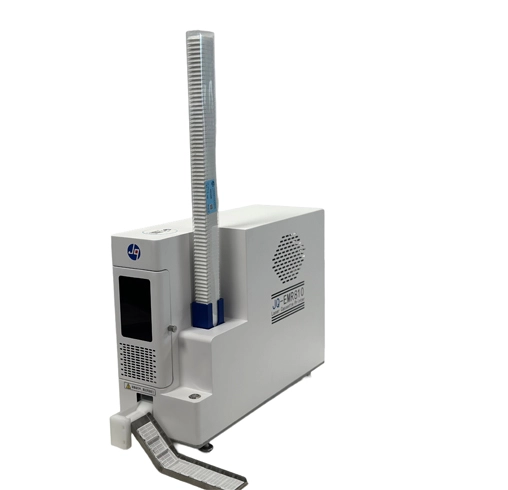
An on-demand cassette printer can be positioned near the grossing workstation so technicians generate cassettes according to the specimens being processed. Jinquan's pathology solution page, for example, describes an EMR830 installation in a Czech laboratory where the printer is positioned next to the grossing station for step-by-step cassette printing.
Larger laboratories may work differently. If one centralized workstation prepares cassettes for several departments or operators, a batch cassette printer may provide a more appropriate workflow.
When comparing these options, procurement teams should consider the number and types of cassettes used, peak printing volume, barcode requirements, LIS/HIS connectivity, available workstation space, print permanence, chemical resistance, and whether the laboratory needs one cassette at a time or larger batches.
Jinquan's UV laser cassette printer range currently includes both on-demand and batch configurations and is designed for direct marking without ink or ribbon. The manufacturer also states that its laser marking is intended to remain readable through chemical exposure during routine processing.
Tissue Processing: Capacity Should Follow the Laboratory's Real Workload
Once representative tissue samples have been placed into cassettes, they need to undergo tissue processing before embedding and sectioning. This is another stage where capacity planning becomes important.
Procurement teams should not choose a tissue processor based only on maximum capacity. Processing programs, reagent management, workflow reliability, ease of operation, maintenance requirements, and the relationship between processing capacity and daily specimen volume should all be considered.
If a laboratory routinely receives large batches of specimens at predictable times, processing capacity needs to accommodate those peaks without creating unnecessary delays. For smaller laboratories, excessive capacity may simply increase investment without providing meaningful workflow benefits.
A laboratory planning this stage can evaluate the JQ-WH-T330 tissue processor within the context of the complete specimen preparation workflow rather than treating the tissue processor as an isolated purchase. Jinquan currently lists tissue processing as one of its core pathology instrument categories alongside grossing, identification, freezing, staining, and specimen management equipment.
The key procurement question remains the same: does the equipment fit the laboratory's actual workload and workflow?
Slide Printing: Continue Identification After Sectioning
Once processed tissue has been embedded and sectioned, specimen identification needs to continue onto microscope slides.
This is where laboratories should think about cassette and slide identification as one traceability process rather than two separate printing projects. If a cassette has already been assigned a barcode or other identifier, the slide workflow should preserve the relationship between the tissue block, slide, and original case.
When selecting a laser slide printer, buyers should consider slide compatibility, barcode readability, print permanence, throughput, footprint, operator workflow, LIS/HIS connectivity, and whether the laboratory requires on-demand or batch printing.
For laboratories where slides are produced individually at several microtomy workstations, an on-demand printer can keep identification close to the point where the slide is created. Centralized laboratories preparing larger quantities may benefit from batch printing.
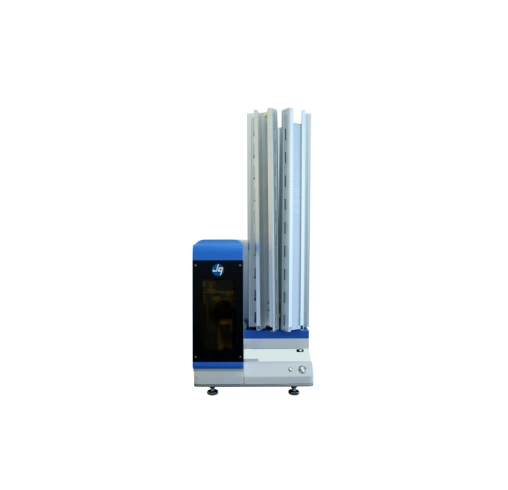
Some equipment can support both approaches. Jinquan's GM6210, for example, is described as a dual-magazine slide printer supporting on-demand and batch workflows, with the batch configuration collecting up to 50 slides.
Again, the highest printing speed is not necessarily the deciding factor. The more important consideration is whether the printing workflow reduces manual matching, sorting, and data-entry steps.
Staining and Coverslipping: Consider Automation Beyond Identification
After slides have been prepared, staining and coverslipping represent another important stage in the histopathology process.
Laboratories planning modernization should evaluate how much manual handling currently occurs during staining and coverslipping and whether automation could improve consistency or reduce repetitive operator tasks.
When comparing staining systems, buyers may need to consider specimen volume, staining protocols, reagent handling, cross-contamination management, throughput, slide tracking, coverslipping requirements, and operator involvement.
Instead of viewing staining equipment as a completely independent system, laboratories can evaluate an drop stainer and coverslipper as another connected stage of the pathology workflow. Jinquan currently includes individual staining and coverslipping among its main pathology automation categories and positions the system around individual-slide processing rather than conventional batch-only handling.
This is particularly relevant for laboratories considering broader automation. Improving identification at the beginning of the workflow creates more value when downstream processes are also planned around consistent specimen handling.
Block and Slide Storage Should Be Planned Before the Archive Becomes a Problem
Specimen archiving is often considered only after laboratories begin running out of storage space or technicians spend increasing amounts of time locating historical blocks and slides.
However, long-term storage should be included in laboratory planning from the beginning.
As specimen volume increases, thousands of blocks and slides can accumulate quickly. Manual filing may work adequately at lower volumes, but retrieval, return, sorting, and location management can become increasingly labor-intensive.
Laboratories should therefore consider how long blocks and slides need to be retained, how frequently archived specimens are retrieved, what physical storage capacity is required, and whether barcode-based identification can support faster retrieval.
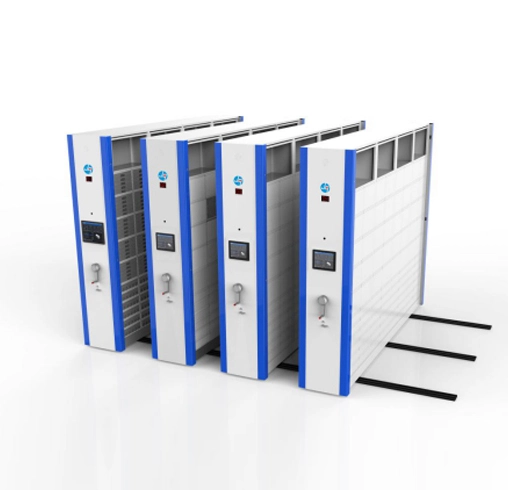
For laboratories moving toward automated specimen management, equipment such as a block and slide sorter can be evaluated together with block and slide storage cabinets. Jinquan's current pathology portfolio includes automated archiving and storage products alongside its identification equipment, allowing specimen management to be considered as part of the same workflow.
Planning this stage early can prevent a modern front-end laboratory from eventually depending on an inefficient manual archive.
LIS/HIS Connectivity Should Connect the Physical and Digital Workflow
Modern laboratory automation is not only about moving specimens more efficiently. Information needs to move with them.
If equipment operates independently from the laboratory's information system, technicians may still need to re-enter case numbers, manually select templates, or match specimens with printed identifiers. This can limit the value of otherwise automated equipment.
When planning a histopathology laboratory, procurement teams should therefore identify where LIS/HIS data enters the workflow, which equipment needs to receive specimen information, which barcode formats are used, and how information should move between cassette and slide identification.
These requirements should be discussed with the supplier before ordering equipment. IT or LIS personnel should also be involved early enough to identify interface requirements and testing responsibilities.
For example, Jinquan's EMR840 on-demand cassette printer lists HIS/LIS integration and support for 1D and 2D barcode content, illustrating why connectivity should be evaluated alongside mechanical specifications when selecting identification equipment.
A modern pathology laboratory should connect physical specimen movement and digital specimen information as closely as practical.
Laboratory Layout Should Follow the Workflow
Equipment selection and laboratory layout should be planned together.
Placing a cassette printer far from the grossing station may create unnecessary specimen movement. Positioning slide printers away from microtomy workstations may introduce additional sorting. Insufficient space around larger instruments can make routine maintenance more difficult, while poor planning of specimen movement can create crossing paths between clean and processing areas.
Before equipment is ordered, laboratories should map the expected route of specimens and operators through the room. Consider where specimens enter, where cassettes are generated, where processed blocks move, where slides are prepared, where staining occurs, and where finished blocks and slides are archived.
Utilities should also be planned early. Depending on the equipment, buyers may need to confirm ventilation, drainage, water supply, electrical requirements, network connections, exhaust systems, and access for installation or future maintenance.
For larger projects, sharing the proposed laboratory layout with the equipment supplier can help identify practical installation issues before equipment arrives.
Don't Build Only for Today's Specimen Volume
A pathology laboratory is usually expected to operate for many years, while specimen volumes, staffing, diagnostic services, and automation requirements may change much faster.
Buying equipment with no consideration for future expansion can lead to premature replacement. At the same time, buying excessively large systems for hypothetical future demand can unnecessarily increase project cost.
The better approach is to identify realistic growth scenarios.
Can additional printers be added later? Can the laboratory move from on-demand to mixed on-demand/batch workflows? Can specimen storage capacity be expanded? Can additional workstations communicate with the same information environment? Can the supplier support additional pathology equipment when automation expands?
These questions are particularly important for hospital groups, centralized laboratories, and distributors supporting customers through several stages of laboratory development.
Choosing Equipment as a System, Not a Shopping List
A modern histopathology laboratory should not be built by simply purchasing the highest-specification instrument in every product category.
The laboratory works as a system. Grossing affects cassette identification; cassette identification affects tissue traceability; tissue processing feeds sectioning; slide identification supports downstream staining and diagnosis; and all of these processes eventually lead to specimen archiving.
For procurement teams, the better approach is to map the workflow first, determine where equipment provides meaningful operational value, and then select products according to actual workload, traceability requirements, information-system compatibility, laboratory space, service capability, and future growth.
Buyers planning a new pathology laboratory or upgrading an existing facility can review Jinquan's complete pathology equipment range and pathology laboratory solutions before submitting their laboratory layout, expected specimen volume, and equipment requirements to Jinquan Medical for further technical discussion.
(1)_20260113172827.webp "JQ-GM6210P On-Demand Slide Printer")